
White Label Fantasy Sports App Development: Cost & Feature Guide
 by Sonic TechPro
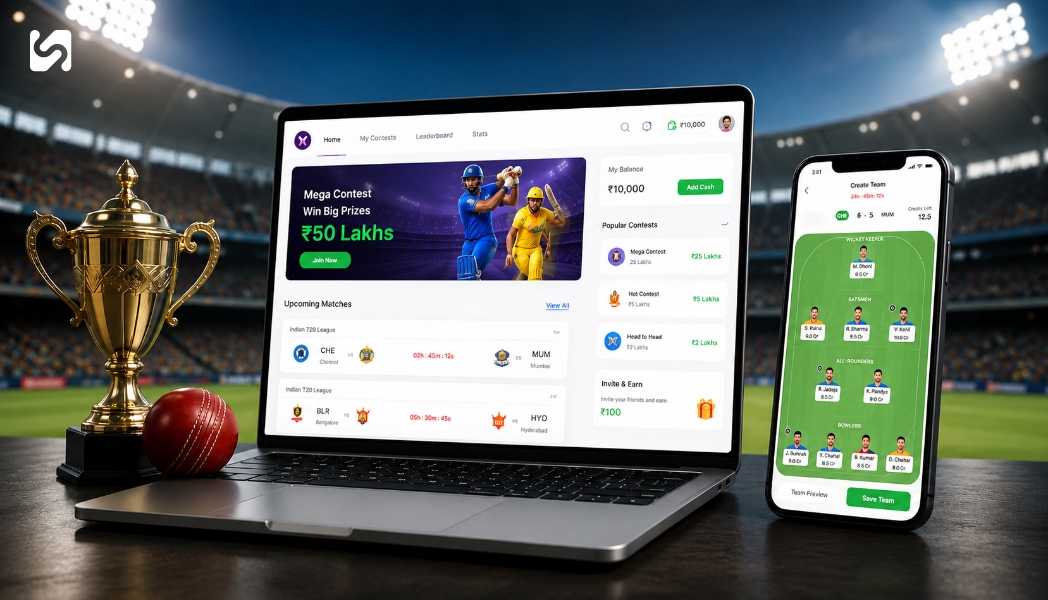
White label fantasy sports app development is the fastest way to launch a branded fantasy platform without building everything from scratch. Instead of spending months and a large budget on custom code you license a ready-made platform. Then you add your brand and go live. This guide covers how white label fantasy sports software development works. It walks through features, tech stack, cost in 2026, business models, and the step-by-step path to launch.
The Rise of White Label Fantasy Sports Solutions
Fantasy sports has exploded into a global industry. Fans no longer just watch games. They build teams, join contests, and compete for real rewards. This boom has created huge demand for fantasy platforms and many new businesses want in. The problem is that building a platform from zero is slow and expensive. That is exactly why ready-made fantasy sports app solutions have taken off.
What Is White Label Fantasy Sports App Development?
White label fantasy sports app development means licensing or buying a pre-built fantasy sports app from a provider. You then brand it as your own. The core engine already exists that includes contests, scoring, payments, and live data. Your job is to add your logo, colors, and content on top. The result looks and feels like your own product even though the underlying technology is shared.
Why Businesses Are Choosing Ready-Made Fantasy Sports Platforms
Companies pick this route because it removes the biggest barriers to entry. There is no need to hire a large engineering team and fund a long build. The technical risk sits largely with the provider. This frees businesses to focus on what they do best. That means marketing, user acquisition, and growth. For startups and growing brands this is a low-risk way to enter a fast-moving market.
Benefits of Developing a White Label Fantasy Sports App
A white label or Re-branded fantasy sports app development for startups offers several clear advantages.
Faster Time to Market. The platform is ready to deploy. You can launch in as little as two weeks. That speed lets you catch a tournament or season while interest is high.
Lower Development Cost. You avoid the large upfront expense of custom development. A setup fee and a subscription replace a six-figure build.
Reduced Technical Complexity. The provider handles servers, updates, and infrastructure. You do not need deep technical skills in-house.
Ready-Made Scalable Infrastructure. The platform is built to handle traffic spikes during big matches. Scaling is part of the package.
Easy Branding and Customization. You apply your brand quickly. Logo, colors, and content are yours from day one.
Custom vs White Label Fantasy Sports Software: Key Differences
Before we jump into white label fantasy sports app development guide, Let’s understand the key features in both.
| Aspect | Custom Fantasy Sports App | White Label Fantasy Sports Software |
| Development cost | High upfront | Low upfront |
| Time to market | Several months | A few weeks |
| Customization | Unlimited | Limited to platform |
| Ownership | Full code and IP | Licensed, no source code |
| Scalability | Built for your growth | Provider infrastructure |
| Security | Your own standard | Inherited from provider |
| Maintenance | You manage | Handled by provider |
| Revenue potential | Higher long term | Strong and fast to start |
Top Fantasy Sports Apps to Inspire Your White Label Idea
Studying fantasy sports leaders helps you shape your own white label fantasy sports app development roadmap. Here are top apps to learn from.
DraftKings. A US giant known for daily fantasy sports and a slick, fast-paced contest experience. Its strength is variety and a polished user interface.
FanDuel. Another major US player famous for daily fantasy and a smooth onboarding flow. It excels at making contests simple to join.
Yahoo Fantasy. A long-running platform strong in season-long leagues across many sports. Its strength is community and deep league management.
These leading fantasy sport apps show what users expect. Smooth signup. Fast contests. Reliable live scoring. Your white label fantasy sports app development should match that bar.
Key Features of a White Label Fantasy Sports App
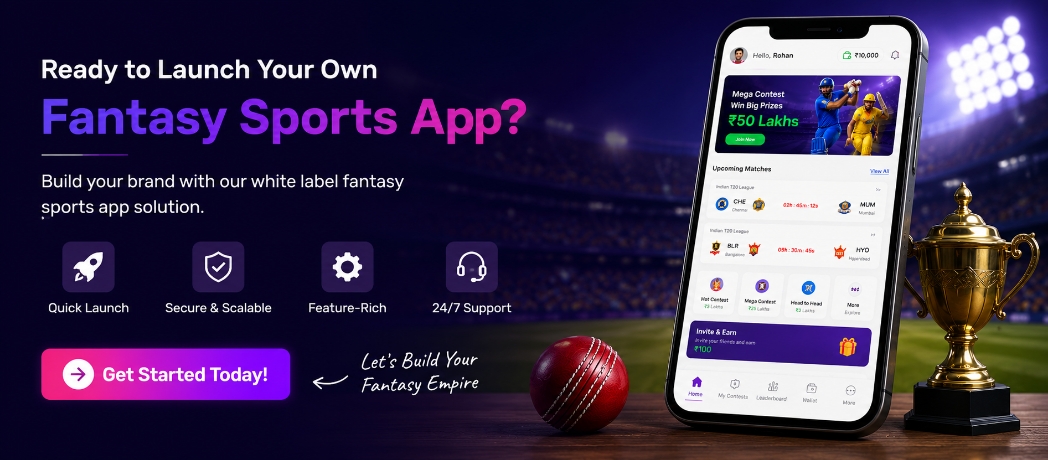
Every strong white label fantasy platform shares a core set of features that your must consider while developing your fantasy sport app.
User Registration and Authentication. Simple signup with social login and secure account protection.
Contest Creation and Participation. The heart of the app. Users build teams and join contests and create contests with ease.
Real-Time Sports Data Integration. Accurate live scores and player stats pulled from trusted data feeds.
Payment Gateway Integration. Secure deposits, withdrawals, and contest entries through trusted gateways.
Leader boards and Rewards System. Live rankings and prizes that fuel competition and keep users active.
Push Notifications and Engagement Tools. Match alerts and contest reminders that bring users back.
Advanced Features of a White Label Fantasy Sports App
Once the core features are in place, Given below advanced capabilities can help your fantasy sports app stand out in competition and grow.
AI-driven recommendations – Smart suggestions for team selections and player picks based on form, history, and matchups, helping users make better choices and stay engaged.
Multiple contest formats – Head-to-head duels, mega contests, and private leagues that give users variety and keep gameplay fresh across every match.
Multi-sport support – One platform covering cricket, football, basketball, and more, so users play their favorite sports without leaving your app.
In-app wallet with instant withdrawals – A secure wallet for fast deposits and quick payouts, which builds trust and encourages repeat play.
Referral and loyalty programs – Built-in rewards that turn existing users into a growth engine and boost long-term retention.
Live chat and community features – Social tools that create a sense of belonging and keep users coming back between contests.
Multi-language and multi-currency support – Localized experiences that let your fantasy app serve users across different regions and markets.
Fraud detection and responsible-gaming controls – Safeguards that protect users, ensure fair play, and keep your platform compliant.
Detailed analytics dashboard – Real-time insight into user engagement, revenue, and behavior so admins can make smarter business decisions.
What Tech Stack Is Required for White Label Fantasy Sports Development
The right technology stack keeps your fantasy sports app fast, accurate, and stable even during heavy match-day traffic. A typical high-performance white label fantasy sports app development techstack includes:
Mobile (Flutter, React Native, Swift, Kotlin) – Cross-platform and native frameworks that deliver smooth, responsive apps on both iOS and Android.
Frontend (React.js, Next.js, Vue.js) – Modern libraries for fast-loading, engaging user interfaces.
Backend (Node.js, Django, Laravel) – Reliable server-side technologies that power contests, users, and transactions.
Database (PostgreSQL, MongoDB, Redis) – A mix of structured and flexible storage, with Redis handling real-time data at speed.
Real-time data (WebSockets and sports data APIs) – The backbone of live scoring, delivering instant score and stat updates.
Cloud (AWS, Google Cloud, Azure) – Scalable hosting with auto-scaling to absorb traffic spikes during big matches.
Payments (Stripe, Razorpay, PayPal) – Trusted gateways for secure deposits, entries, and withdrawals.
What Third-Party Integrations Required for Whitelabel Fantasy Sports App Development
A white label fantasy sports app depends on external services to run smoothly and stay compliant. The essential integrations include:
Sports data providers – Live scores, fixtures, and detailed player statistics from trusted feeds that keep gameplay accurate.
Payment gateways – Secure handling of deposits, contest entries, and payouts to give users confidence in every transaction.
KYC and identity verification tools – Automated identity and age checks that keep your platform legal and secure.
SMS and push notification services – Real-time alerts that drive engagement and bring users back to the app.
Analytics and tracking platforms – Tools that measure user behavior and campaign performance to guide growth.
Cloud hosting and CDN services – Fast, reliable content delivery that keeps the app responsive for users everywhere.
How to Develop a White Label Fantasy Sports App
Developing a white label fantasy sports app is far quicker than a custom build, but it still rewards careful planning. With a capable provider, these six steps take many businesses from idea to a live, branded platform in just two to four weeks.
Define Your Goals and Target Audience. Clarify what your fantasy sports app should achieve and who it serves. Decide which sports, contest formats, and regions you will cover, as this foundation shapes every decision that follows.
Choose a Reliable White Label Provider. Evaluate providers on stability, feature depth, pricing transparency, and scalability. A proven white label fantasy sports software provider with a strong portfolio lowers your risk and gives your app a dependable backbone.
Brand and Customize the Platform. Apply your logo, colors, and content to give the app a distinct identity. Strong branding is what sets your fantasy sports app apart from competitors built on similar platforms.
Configure Contests, Payments, and Data Feeds. Set up your contest types and prize rules, then integrate secure payment gateways and real-time sports data feeds. Accurate live scoring and smooth transactions are the core of a trustworthy experience.
Test the App Thoroughly. Test across devices, operating systems, and heavy load conditions to confirm the app stays fast, stable, and accurate during peak match-day traffic. Rigorous testing protects your brand from a shaky launch.
Launch and Promote Your App. Deploy your branded fantasy sports app to the app stores and the web, then drive user acquisition through targeted campaigns, influencer partnerships, and referral programs.
How You Can Make Money With a White Label Fantasy Sports App
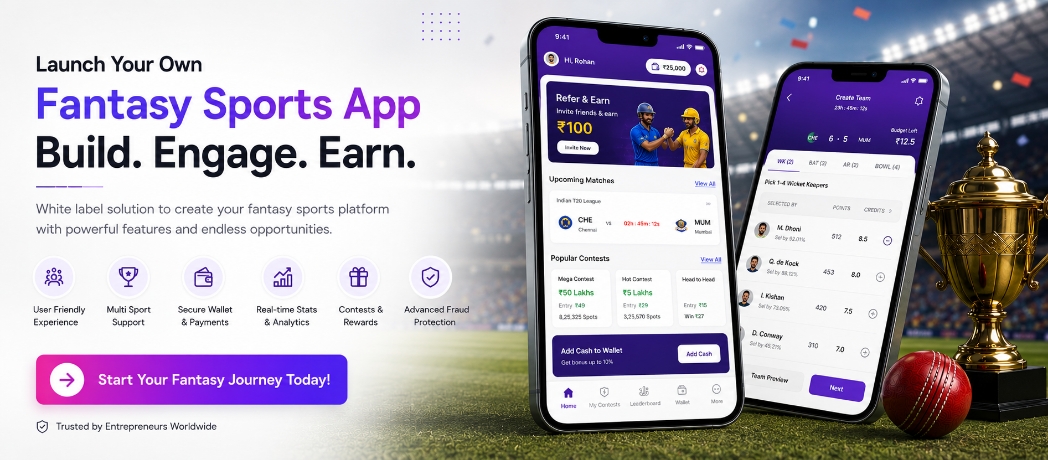
A white label fantasy sports app can earn from day one as the format naturally supports several income streams. The key is to plan your model early and combine a few sources for stability.
Business Models for White Label Fantasy Sports Apps
Commission-Based Model. You take a percentage of each contest pool and revenue grows directly with participation.
Entry Fee-Based Contests. Users pay to join contests and share of those fees becomes your income.
Freemium Model. The core app is free but Users pay for premium contests or features. This drives fast user growth.
Subscription-Based Model. Users pay a recurring fee for access or premium perks. This creates steady predictable revenue.
Revenue Generation Opportunities for Readymade Fantasy Sports Apps
Contest Entry Fees- The primary income source for most fantasy apps.
In-App Advertising- Display ads and sponsored contests once you have an active audience.
Premium Features- Paid analytics, advanced stats, or exclusive contests.
Sponsorship and Partnerships- Brand deals and sponsored events that add high-value revenue.
Legal Considerations of White Label Fantasy Sports Platform Development
Fantasy sports sit in a sensitive legal space. Rules vary widely by country and region. Some treat it as a game of skill. Others restrict or ban it. You must check the laws in every market you target such as
- Gaming Regulations by Region
- Data Privacy and Security Compliance
- Payment Gateway Regulations
Key areas to plan for include KYC and age verification, secure payments, data privacy, responsible-gaming features, and tax compliance. Always consult a qualified lawyer before you launch.
Challenges in White Label Fantasy Sports App Development
The model has real benefits but there are some challenges as well.
- Limited Customization – You work within the provider’s existing feature set. Branding like logos and colors is easy, but deeper structural changes or unique features may not be possible. If your vision depends on a mechanic no other platform offers, this can be a real limitation.
- Dependency on Providers – Your platform’s performance rests on the vendor. Their uptime, updates, and support quality shape your users’ experience, so a provider issue during a big match becomes your brand’s problem. Choosing a dependable provider is critical.
- Licensing Restrictions – You license the platform rather than own it, and the source code usually stays with the provider. That limits your control and can complicate raising investment or selling the business later.
- Market Competition – The low barrier to entry that makes white label attractive also means rivals can launch similar apps fast. Since many businesses may share the same underlying platform, your branding and marketing must work harder to stand out.
- Data Ownership and Portability – On many platforms your user and transaction data lives in the provider’s infrastructure, making it hard to export or migrate if you switch vendors later. Clarify upfront what data you own and whether you can take it with you, because your user base is a valuable long-term asset.
- Scalability and Performance Ceilings – You are bound by the vendor’s infrastructure and your plan. During a major tournament, concurrent users can surge within minutes, and a platform not built for that scale may slow or crash. Confirm the provider’s performance track record and scaling limits before launch.
How to Develop White Label Fantasy Sports App – Step-by-Step Process
Launching a white label fantasy sports app is far simpler than a custom build, but a clear process still makes the difference between a smooth launch and a rocky one. Follow these five steps.
Requirement Analysis. Start by defining your target audience, the sports you want to cover, your contest formats, and your budget. Clear requirements shape every decision that follows and help you pick the right white label fantasy sports platform from the outset.
Platform Selection. Choose a white label fantasy sports software provider whose features, pricing, and scalability match your needs and long-term growth plans. This choice underpins your entire venture, so weigh stability, support, and customization options carefully.
Branding and Customization. Apply your logo, colors, and content, then configure your contests and prize structures so the app feels genuinely yours. Strong branding is what sets your fantasy sports app apart in a crowded market.
Testing and Deployment. Test the app thoroughly across devices and under heavy load to confirm stability, speed, and accurate live scoring. Once it passes, deploy your branded fantasy sports app to the app stores and the web.
Marketing and User Acquisition. Launch is the starting line, not the finish. Promote your app through targeted campaigns, influencer partnerships, and referral programs to attract and retain your first wave of active users.
Cost of White Label Fantasy Sports App Development in 2026
White label fantasy sports app development cost is far lower than custom. Still it helps to understand where the money goes. These figures are indicative and vary by provider and region.
Setup Fees and Licensing Costs – A one-time setup fee plus a licensing charge to use the platform. This covers branding and initial configuration.
Subscription and Maintenance Charges Recurring monthly or annual fee that covers hosting, updates, and support.
Hidden Costs and Revenue Share Models. Watch for per-user fees, feature-unlock charges, and revenue-share clauses. Some providers take a cut of your contest revenue. Read the contract closely before you sign.
Costs to build whitelabel fantasy app mainly depend on customization requirements, supported sports, payment integrations, and feature enhancements
| Fantasy Sports App Type | Estimated Cost |
| Basic White Label Fantasy Sports App | $5,000 – $15,000 |
| Mid-Level White Label Fantasy Sports App | $15,000 – $35,000 |
| Advanced White Label Fantasy Sports App | $35,000 – $70,000+ |
Factors Affecting White Label Fantasy Sports App Development Cost
- Number of supported sports
- UI/UX customization requirements
- Payment gateway integrations
- Real-time sports data APIs
- User volume and scalability requirements
- Mobile app platforms (iOS and Android)
- Third-party integrations
- Licensing and regulatory compliance
- Ongoing maintenance and support
With hiring white label fantasy sports app development services, you pay a smaller predictable cost over time instead of a large upfront sum. That makes budgeting easier for a new business.
How to Choose the Right White Label Fantasy Sports App Provider
Your white label fantasy sports app development service provider choice shapes your success. Judge them on these points.
- Key Evaluation Criteria. Look at platform stability, feature depth, pricing transparency, and contract terms.
- Experience and Portfolio. Review their past work and live apps. A proven track record lowers your risk.
- Scalability and Support Services. Confirm the platform handles match-day traffic. Check the quality and speed of support.
- Customization Options. Make sure you can brand and adapt the app enough to stand out from rivals.
Read More – Custom Vs White Label Fantasy Sport App
How SonicTechPro Can Help You Develop a White Label Fantasy Sports App
SonicTechPro develops white label fantasy sports apps that launch fast and scale well. Our team handles branding, customization, data integration, and deployment from start to finish. You get a proven fantasy sports platform shaped around your brand and your goals.
We also guide you on monetization, compliance, and growth. The result is a market-ready fantasy app without the cost and delay of a full custom build. Tell us your idea and we will help you bring it to life.
Frequently Asked Questions
