
How to Build a Live Shopping App Like Amazon Live: Complete Guide (2026)
 by Sumit Kumar
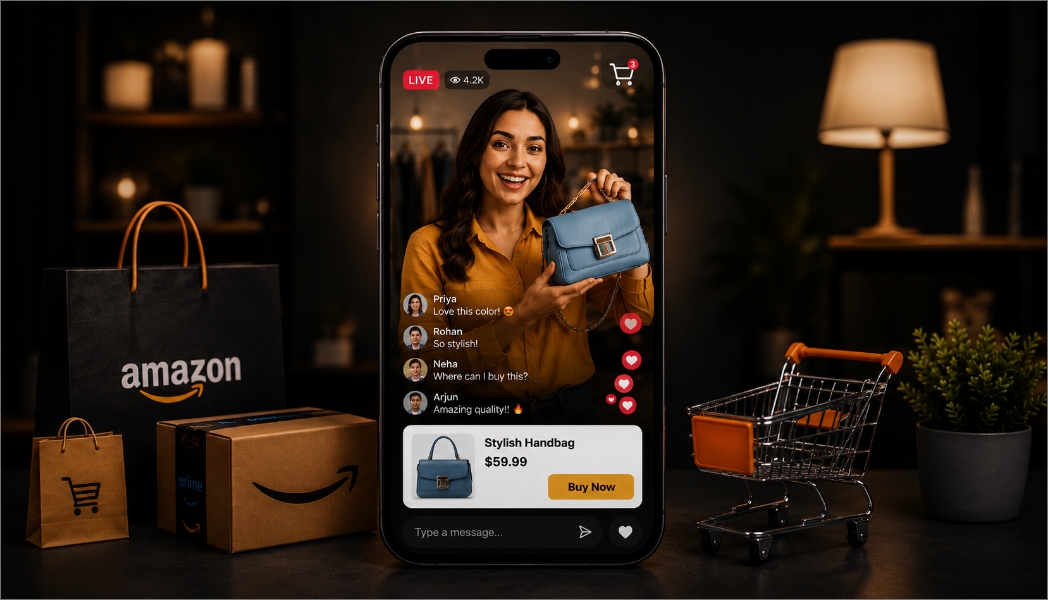
Live shopping has turned the old “watch an ad, then go buy” model on its head. Instead of static product pages, shoppers now tune into real-time shopping app like Amazon Live where a host demonstrates products, answers questions, and lets viewers buy in a single tap all without leaving the video.
Live commerce has grown into a multi-hundred-billion-dollar channel worldwide, led by Asia and now accelerating across the US and Europe. Platforms such as Amazon Live, TikTok Shop, Whatnot, and Flip have demonstrated that video-first commerce can significantly increase engagement and conversion rates compared to traditional ecommerce experiences.
If you’re wondering how to build a live shopping app like amazon live that captures this momentum — something in the spirit of Amazon Live, TikTok Shop, or Whatnot — this guide walks you through the entire journey.
In this guide, you’ll learn:
- What live shopping is and why it’s growing rapidly?
- How does Amazon Live work?
- The business model behind successful live commerce platforms
- Essential features and technology requirements
- Dev process and cost considerations
- Challenges, trends, and examples from the market
What Is Live Shopping (Live Commerce)?
Live shopping, also known as live commerce or live stream shopping, is a format in which a brand or creator streams a video live while viewers are shopping, make a purchase of the products they are live-streaming and ask questions. Imagine it as the digital, interactive transformation of a TV shopping channel, retooled for mobile, social, and on-demand consumers.
How Does a Live Shopping App Work?
How does a live shopping app work? – What is live shopping? – Live shopping is a live presentation by the host of the products. When an item is spotted, it has a shoppable overlay of a tap-to-buy card that adds the product to the shopping cart without disrupting the flow of the page. The audience can ask questions, react, and comment in a real time chat, which the host reacts to in real time. The two-way, interactive loop is different from a pre-recorded product video.
Why is Live Commerce Growing Fast?
There are three forces: audiences that are mobile-first and used to watching shorter videos; creators and brands who are seeking to find a more converting channel; shoppers who want to buy with the same level of assurance they have when they see it in action. The cost and speed of streaming systems have been declining, making it much easier to start a live shopping platform.
Live Shopping vs Traditional Ecommerce
| Feature | Live Shopping | Traditional Ecommerce |
| Customer Interaction | Real-time | Limited |
| Product Demonstration | Live | Static images/videos |
| Engagement Level | High | Moderate |
| Purchase Journey | Interactive | Self-directed |
| Conversion Potential | Higher | Lower |
| Community Building | Strong | Limited |
While traditional ecommerce remains effective, live shopping apps like Amazon introduces social interaction that can significantly improve engagement and conversions.
How Does a Live Shopping App Like Amazon Live Work?
Before jumping into how to create an app like amazon live, let’s jump into how live shopping app like amazon work? Amazon Live is Amazon’s dedicated live shopping platform that allows brands, influencers, and sellers to showcase products through live broadcasts. It creates an interactive shopping experience where viewers can watch product demonstrations and purchase featured items without leaving the stream.
The process is simple:
- A creator starts a live stream.
- Products are pinned beneath the video.
- Viewers watch demonstrations and discussions.
- Customers interact through comments.
- Products can be purchased instantly.
- Orders are processed through Amazon’s ecommerce infrastructure.
Live Shopping Statistics & Facts
- The global live commerce market was valued at USD 172.86 billion in 2025 and is projected to reach USD 2.55 trillion by 2033.
- Countries with the highest live shopping adoption rates include India (75%), Thailand (73%), and the UAE (72%).
- Global livestream shopping sales grew from USD 57 billion in 2019 to approximately USD 682 billion in 2023.
- The live commerce industry is expected to surpass USD 1.1 trillion by 2026.
- India is projected to be Asia’s fastest-growing live commerce market, with revenues expected to reach USD 140 billion by 2033.
Amazon Live Statistics
- 17x Higher Purchase Rate: Audiences exposed to Amazon Live campaigns alongside at least one other ad product were 17 times more likely to purchase than those not exposed to Amazon Live.
- 55% Higher Branded Search Rate: Viewers who saw Amazon Live creative assets (display or video ads) plus another ad product showed a 55% increase in branded searches.
- 79% Enjoy Live Shopping: Nearly 8 in 10 Amazon Live shoppers find live shopping events engaging and entertaining.
- 73% Purchase with Confidence: Almost 3 in 4 Amazon Live shoppers feel confident about purchases made during live shopping experiences.
Benefits of Developing an App Like Amazon Live
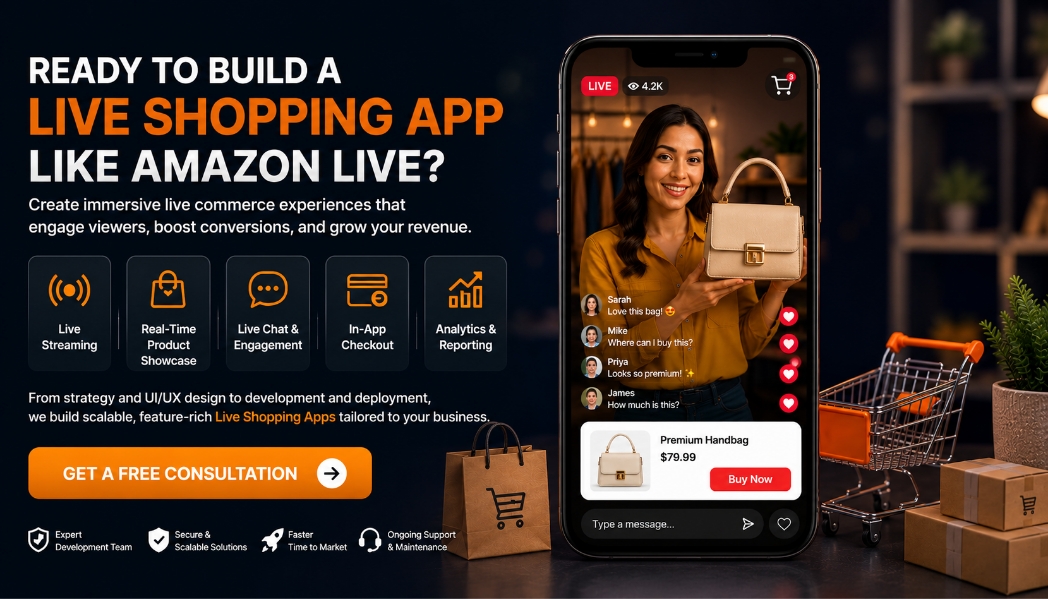
Live shopping offers significant advantages compared to traditional ecommerce experiences. Building a live shopping app like Amazon Live creates a win-win ecosystem where businesses increase sales and customer engagement, while influencers unlock new monetization opportunities and build stronger audience relationships.
| Benefit | For Ecommerce Businesses | For Influencers & Creators |
| Higher Customer Engagement | Live video keeps shoppers engaged longer than traditional product pages, increasing interaction and brand visibility. | Influencers can interact directly with followers through live chats, reactions, and Q&A sessions, strengthening audience relationships. |
| Improved Conversion Rates | Real-time product demonstrations help customers make faster purchasing decisions, leading to higher sales. | Creators can drive more purchases through authentic product recommendations and earn higher commissions. |
| Increased Customer Trust | Brands can showcase products live, answer questions instantly, and build transparency with potential buyers. | Live interactions help influencers establish credibility and authenticity with their audience. |
| Stronger Community Building | Businesses can create loyal customer communities through recurring live events and exclusive product launches. | Influencers can build highly engaged communities that regularly return for content and shopping experiences. |
| Better Product Discovery | Live streams help customers discover new products they may not have searched for otherwise. | Creators can introduce followers to trending products and niche brands through engaging content. |
| Reduced Return Rates | Detailed demonstrations give shoppers a clearer understanding of products before purchasing, reducing returns. | Fewer customer complaints and returns improve audience trust and long-term credibility. |
| New Revenue Opportunities | Businesses can generate revenue through direct sales, flash deals, and live-exclusive promotions. | Influencers can monetize content through affiliate commissions, sponsorships, and brand partnerships. |
| Real-Time Customer Feedback | Brands receive immediate feedback on products, pricing, and customer preferences during live sessions. | Creators gain valuable insights into audience interests and purchasing behavior. |
| Enhanced Brand Visibility | Regular live shopping events increase brand awareness and customer retention. | Influencers can expand their reach, attract new followers, and strengthen their personal brand. |
| Data-Driven Optimization | Analytics help businesses track engagement, conversions, and product performance to improve future campaigns. | Creators can identify top-performing content and optimize future live shopping sessions for better results. |
Key Players and Amazon Live alternative
There are many live shopping applications that are live on the app store but there are major alternatives of Amazon Live that can inspire your journey of developing an live app like Amazon Live.
| TikTok Shop | Whatnot | Flip |
| TikTok Shop combines short-form content, influencer marketing, and ecommerce into a single platform.
Strengths
TikTok Shop has become one of the fastest-growing social commerce ecosystems globally. |
Whatnot specializes in live auctions and community-driven commerce.
Strengths
|
Flip combines product reviews, creator-generated content, and ecommerce. It focuses heavily on creator-led product discovery.
Strengths
|
Essential Features to Develop an App Like Amazon Live
Building an app like Amazon Live requires a combination of live streaming, ecommerce functionality, and real-time engagement features. The right live shopping app features set helps create a seamless shopping experience while improving user retention and conversions.
User Registration and Profiles
Users should be able to quickly create accounts, manage profiles, follow creators, save preferences, and access their purchase history. Personalized profiles also help deliver relevant product recommendations and live shopping events.
Live Video Streaming
Live video streaming is the foundation of any live commerce platform. To ensure a smooth viewing experience, the app should support low-latency streaming, high-quality video, adaptive bitrate technology, and multi-device compatibility.
Product Catalog Integration
A live shopping app should allow products to be displayed directly during broadcasts. Features such as product tagging, pinned products, real-time inventory updates, and personalized recommendations help simplify the buying journey.
In-App Purchases
A frictionless checkout process is critical for maximizing conversions. Users should be able to make secure purchases through one-click checkout, multiple payment options, and real-time order tracking without leaving the stream.
Live Chat and Audience Engagement
Interactive features such as live comments, reactions, polls, and Q&A sessions encourage participation and build trust between hosts and viewers, making live shopping more engaging than traditional ecommerce.
Push Notifications
Push notifications help increase user retention by alerting customers about upcoming live events, product launches, flash sales, and personalized recommendations.
Analytics Dashboard
A comprehensive analytics dashboard allows businesses to track key metrics such as viewer count, watch time, engagement rate, conversion rate, revenue generated, and product performance, helping optimize future live shopping campaigns.
| Viewer Features | Functionality |
| Live video playback | Smooth, low-latency stream viewing on any device |
| Real-time chat | Lets viewers ask questions and interact live |
| Reactions / likes | Boosts engagement and social energy on the stream |
| Shoppable product overlays | Tap-to-buy cards layered over the video |
| One-tap add-to-cart | Removes friction between watching and buying |
| In-stream checkout | Complete a purchase without leaving the stream |
| Wishlists | Save products to buy later |
| Stream Push notifications | Alerts viewers when a favorite host goes live |
| Seller / Host Features | Functionality |
| Go-live dashboard | One place to start, manage, and monitor a stream |
| Real-time product tagging | Attach products to the stream as they’re shown |
| Inventory & pricing controls | Manage stock and live deals on the fly |
| Live sales & viewer analytics | Track performance and audience in real time |
| Moderation tools | Keep chat safe and on-brand |
| Stream scheduling | Plan and promote upcoming streams |
| Admin Features | Functionality |
| Catalog & order management | Central control of products and orders |
| Payment & refund handling | Secure transactions and smooth returns |
| User & creator management | Onboard and manage shoppers and hosts |
| Content moderation | Platform-wide safety and compliance |
| Commission / payout logic | Automate creator and seller earnings |
| Reporting | Business-wide insights and exports |
Choose the Right Monetization Strategy for Creating App like Amazon Live
Revenue generation should be planned early, not bolted on after launch. The monetization model you choose shapes your features, your audience, and how you scale, so align it with your platform type from day one. Here are the proven monetization models for a live shopping app like Amazon Live.
Commission-Based Model Earn a percentage from every transaction that happens on your platform. It’s the most scalable model because revenue grows directly with sales volume, and sellers only pay when they earn.
Best for: marketplaces and multi-vendor platforms.
Subscription Model Charge creators or brands a recurring monthly or annual fee for access to streaming tools, analytics, and audience reach. It delivers predictable, stable revenue independent of sales volume.
Best for: SaaS-style platforms serving brands and professional sellers.
Advertising Model Generates revenue by selling visibility on your platform through sponsored streams, featured product placements, and brand promotions. It works best once you’ve built consistent viewer traffic worth advertising to.
Best for: platforms with high engagement and large, active audiences.
Affiliate Commerce Earn commissions on third-party product sales by linking to or featuring external brands’ products within streams. It lets you monetize even without holding your own inventory.
Best for: creator-led and content-driven platforms.
Hybrid Model The most successful platforms combine multiple revenue streams — for example, commissions plus subscriptions plus advertising. This diversifies income, reduces reliance on any single source, and maximizes earnings as the platform grows.
Best for: mature, scaling platforms ready to monetize multiple audience segments.
| Monetization Model | How It Earns | Best For |
| Commission-Based | A percentage of every transaction | Marketplaces, multi-vendor platforms |
| Subscription | Recurring fees from creators/brands | SaaS-style platforms |
| Advertising | Sponsored streams, featured products, promotions | High-traffic, high-engagement platforms |
| Affiliate Commerce | Commissions on third-party product sales | Creator-led, content-driven platforms |
| Hybrid | Combines several revenue streams | Mature, scaling platforms |
What TechStack Required to Develop a Shopping App Like Amazon Live
Frontend Technologies: Frontend frameworks support responsive and cross-platform experiences.
React Native, Flutter, Swift (iOS), Kotlin (Android), React.js for web applications
Backend Technologies: Backend systems handle authentication, product management, transactions, analytics, and user engagement.
Node.js, Python, Java, .NET, Golang
Database: PostgreSQL or MongoDB, with Redis for real-time state.
Real-Time Video Streaming Infrastructure: Real-time video streaming for ecommerce requires robust infrastructure.Streaming infrastructure must support low latency, high concurrency, and adaptive delivery.
Streaming protocols (RTMP, WebRTC, HLS)
- RTMP — common for ingesting the host’s stream to the server.
- WebRTC — sub-second latency, ideal for truly interactive, real-time streams.
- HLS / LL-HLS — scalable delivery to large audiences; low-latency variants reduce delay.
Cloud & Scalability Considerations: Scalability becomes increasingly important as audience sizes grow.
Cloud hosting platforms, Auto-scaling services, CDN integration, Distributed databases, Caching layers, Monitoring and observability tools
How to Build an App Like Amazon Live – Step by Step Guide
This is the heart of how to build a live shopping app like Amazon Live. Follow these six stages in order.
Step 1 — Define your niche and business model
Decide who you serve (fashion, beauty, collectibles, electronics, general marketplace) and how you’ll earn (commissions, subscriptions, fees, ads). A focused niche is far easier to launch and market than a do-everything platform.
Step 2 — Plan features and create wireframes
Prioritize a lean feature set for version one. Map the viewer journey — discover a stream, watch, ask, buy and wireframe each screen before any code is written. Resist scope creep; ship the core loop first.
Step 3 — Choose native vs. cross-platform
Native (Swift/Kotlin) gives the best streaming performance; cross-platform (React Native, Flutter) speeds delivery and lowers cost. For an MVP, cross-platform is often the pragmatic choice, with native modules where streaming demands it.
Step 4 — Build the live-streaming infrastructure
This is the technical core. You’ll capture the host’s feed, encode it, and deliver it to many viewers at low latency. Most teams use a streaming provider or media server rather than building delivery from scratch (covered in the tech stack below).
Step 5 — Integrate ecommerce, payments, and cart
Connect your product catalog, shoppable overlays, cart, and a secure checkout. Integrate trusted payment gateways and ensure the purchase flow runs without pausing the stream.
Step 6 — Test, launch, and scale
Load-test for concurrent viewers, test streaming across network conditions and devices, then soft-launch with a small audience. Use early data to refine before scaling marketing and infrastructure.
When the scope grows beyond an in-house team’s capacity, this is the natural point to bring in a partner, our live shopping app development services cover this end-to-end.
How Much does It Cost to Build An App Like Amazon Live
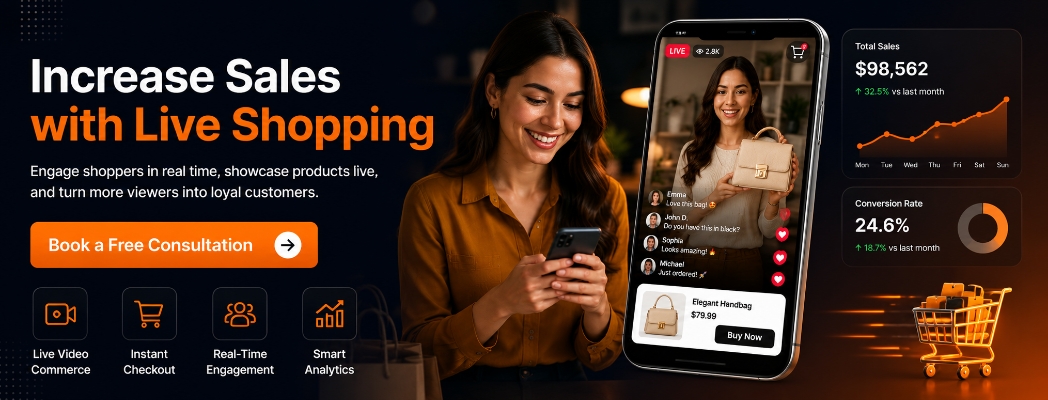
The cost to build a live shopping app varies based on complexity, features, integrations, and scalability requirements.
MVP: An MVP focuses on validating the business idea and launching quickly with essential live commerce functionality.
Mid-tier: A mid-tier platform introduces enhanced engagement, personalization, and operational features to support growing user bases and multiple sellers.
Advanced: An advanced live shopping platform is designed for high-volume traffic, large seller ecosystems, and sophisticated customer engagement strategies.
Factors that affect Amazon Live Clone App Development Cost – Breakdown Table
| MVP (Minimum Viable Product) | Mid-Tier Live Shopping Platform | Advanced Enterprise-Grade Platform |
| Typical Features:
Completion Timeline: 3–6 months
Best For:
|
Typical Features:
Completion Timeline: 6–9 months
Best For:
|
Typical Features:
Estimated Cost: $120,000–$250,000+
Completion Timeline: 9–15+ months
Best For:
|
Common Challenges When Building a Live Shopping App Similar to Amazon Live and How to Solve Them
Live shopping app like amazon live pushes video, commerce, and real-time data to work in perfect sync — and that’s exactly where the hard problems show up. Organizations frequently encounter challenges such as the following, each with a practical solution.
Maintaining low-latency video streaming Even a few seconds of delay breaks the live experience — viewers ask a question and the answer lands too late.
Solution: use low-latency protocols like WebRTC or LL-HLS, adaptive bitrate streaming, and edge delivery so quality and speed hold up across every connection.
Managing peak traffic during events A popular drop or featured host can spike viewers from hundreds to tens of thousands in minutes, overwhelming under-provisioned servers.
Solution: build on auto-scaling cloud infrastructure with a global CDN that absorbs sudden surges without dropping streams or slowing checkout.
Ensuring payment security Handling live, high-volume transactions means protecting sensitive data and meeting regional compliance rules.
Solution: integrate PCI-DSS-compliant payment gateways, encrypt data end to end, and use tokenization so card details never touch your servers.
Moderating live chats Open, real-time chat invites spam, abuse, and off-brand content that can derail a stream instantly.
Solution: combine AI-powered profanity and spam filters with human moderators and host controls (mute, ban, slow mode) to keep chat safe and on-brand.
Preventing fraud Live commerce attracts fraudulent orders, fake accounts, and payment chargebacks.
Solution: deploy real-time fraud detection, device fingerprinting, velocity checks, and AI-driven anomaly monitoring to flag suspicious activity before it costs you.
Synchronizing inventory in real time When hundreds buy the same item mid-stream, stock counts must update instantly or you’ll oversell.
Solution: use real-time inventory syncing with event-driven updates and reservation locks at add-to-cart, so availability stays accurate under load.
Delivering personalized recommendations Generic product suggestions miss the moment and leave conversions on the table.
Solution: use AI-driven recommendation engines that factor in live behavior, watch history, and purchase patterns to surface the right products to each viewer.
Scaling infrastructure efficiently Running streaming, commerce, and real-time messaging at scale can get expensive and brittle fast.
Solution: adopt a microservices architecture, containerization, and elastic cloud resources that scale up for events and down afterward to control costs.
Build vs. Buy — When to Hire a Team to Create an App Like Amazon Live
Building in-house gives maximum control but demands real-time streaming expertise that’s hard to hire quickly. Partnering with a specialized live shopping platform team gets you to market faster with proven streaming architecture. If you’re weighing that route, our custom live shopping app development team can scope the build and give you an accurate, requirements-based estimate.
How Sonictechpro Can Help Build an Amazon Live Clone App
Building an app like Amazon Live requires much more than integrating video streaming and ecommerce functionality. Success depends on creating a seamless user experience, ensuring low-latency live streaming, enabling real-time product discovery, and supporting secure transactions at scale.
At Sonictechpro, we help businesses transform live commerce ideas into high-performing digital products. Our team specializes in designing and developing scalable live shopping platforms that combine engaging livestream experiences with robust ecommerce capabilities.
Conclusion
Live shopping is redefining ecommerce by blending entertainment, community engagement, and seamless purchasing into a single experience. Businesses that invest in creating live commerce apps such as amazon live can create stronger customer relationships, improve conversion rates, and unlock new revenue opportunities.
Whether you’re building a marketplace, influencer-driven platform, or branded shopping experience, success depends on choosing the right features, technology stack, and growth strategy from the start.
Frequently Asked Questions
The cost typically ranges from $25,000 to $250,000+ depending on feature complexity, streaming infrastructure, integrations, and scalability requirements.
An MVP similar to Amazon Live generally takes 3–6 months, while a feature-rich platform may require 6–12 months or more.
An app like Amazon Live typically uses technologies such as React Native or Flutter for mobile, Node.js or Python for backend services, WebRTC or HLS for live streaming, cloud infrastructure for scalability, and secure payment gateways for transactions.
Businesses can monetize an Amazon Live-style platform through sales commissions, subscription plans for sellers, sponsored livestreams, featured product placements, influencer partnerships, advertising opportunities, and premium analytics services.
Live shopping offers stronger engagement, real-time interaction, and potentially higher conversion rates. However, traditional ecommerce remains valuable for self-service purchasing and broad product discovery.
Live commerce is particularly effective for industries such as fashion, beauty, electronics, home décor, fitness, luxury goods, collectibles, and consumer products. Any business that benefits from product demonstrations can leverage live shopping successfully.
