
Social Commerce for Beauty and Fashion: How Brands Can Turn Social Content Into Sales
 by Sumit Kumar
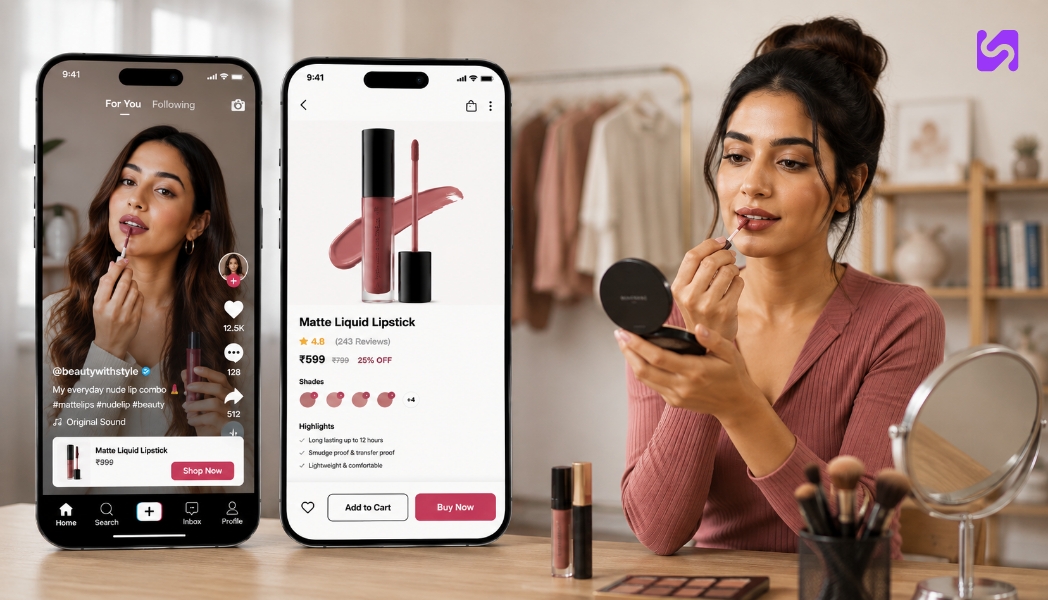
Social commerce for beauty brands and social commerce for beauty brands is changing how consumers discover, evaluate and buy products online. Instead of moving from a social post to a separate website and then searching for the product, shoppers can now discover products through videos, creators, live streams and recommendations and complete the purchase within the same digital journey.
For beauty and fashion businesses, this shift is especially important. Makeup tutorials, skincare demonstrations, styling videos, product reviews and creator recommendations naturally fit social platforms. With shoppable content, live commerce, creator commerce and in-app checkout, brands can turn social engagement into measurable sales.
The opportunity is growing quickly. Statista estimates that global social commerce revenue will reach $586 billion in 2026, with the market projected to reach $929 billion by 2030.
What Is Social Commerce for the Beauty and Fashion Industry?
Social commerce combines social media engagement with online shopping. It allows consumers to discover products, interact with content, explore product information and purchase products through a connected social shopping experience.
| For beauty and fashion brands, this can include: | |
| Shoppable posts and images | User-generated content |
| Shoppable videos | Social product recommendations |
| Product-tagged Reels and short videos | In-app checkout |
| Live shopping | AI-powered product discovery |
| Creator and influencer commerce | Personalized shopping feeds |
The key difference from traditional social media marketing is simple: social commerce connects content directly with the buying journey.
A customer can watch a makeup tutorial, tap the featured lipstick, check product details and purchase it without leaving the shopping environment.
Why Social Commerce Matters for Beauty and Fashion Brands
Beauty and fashion are highly visual categories. Customers often want to see how a product looks, works or fits before making a purchase. Social platforms provide the perfect environment for this type of product discovery.
Social commerce also helps brands reach customers before they have a specific product in mind.
A shopper may not search for “summer dress” on Google. Instead, they may discover a styling video, become interested in the outfit and then purchase the featured product.
This changes the traditional customer journey:
Search → Product → Purchase
into:
Content → Discovery → Engagement → Product → Purchase
The shift is already visible in consumer behaviour. Deloitte reports that 72% of consumers are willing to buy directly through social media, while 60% want more opportunities to discover and purchase products on social platforms.
Latest Social Commerce, Beauty & Fashion Statistics
These statistics demonstrate why social commerce deserves a place in the growth strategy of beauty and fashion brands.
- $586 billion: Global social commerce revenue is estimated at $586 billion in 2026, with projections reaching $929 billion by 2030.
- 5.4+ billion: More than 5.4 billion people used social media worldwide in 2025, creating a massive audience for social discovery and shopping.
- 72%: Deloitte reports that 72% of consumers are willing to buy directly within social media platforms.
- 60%: 60% of consumers want more opportunities to discover and purchase products through social media, according to Deloitte.
- $100 billion: McKinsey estimates that US social commerce sales across consumer categories will reach $100 billion in 2026.
- 18%: Clothing was expected to represent 18% of global social commerce purchases by 2025, making fashion one of the leading social commerce categories.
- 60% growth: TikTok Shop reported 60% year-over-year growth in the UK beauty category during 2025, highlighting the strength of social commerce for beauty products.
- 125% growth: K-Beauty searches on TikTok Shop increased by 125%, showing how social discovery can create demand for specific beauty categories.
- 8 million+ hours: Brands and creators hosted more than 8 million hours of LIVE shopping sessions in the US during 2024, according to TikTok Shop.
- 76%: A GlobalData survey cited by TikTok found that 76% of consumers who engaged with TikTok Shop had purchased something from a livestream during the previous year.
These figures point to a clear trend: social platforms are becoming shopping environments rather than simply advertising channels.
How Social Commerce Works for Beauty and Fashion Brands
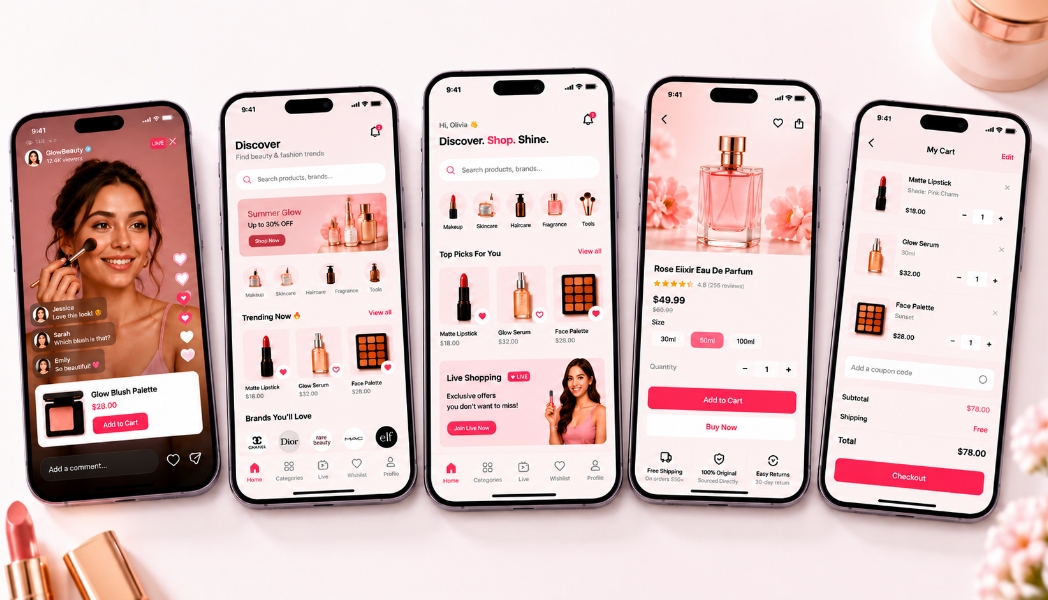
A successful social commerce strategy connects content, product discovery and purchasing into one simple customer journey.
1. Product Discovery
Customers discover beauty and fashion products through short videos, creators, influencers, live streams and social recommendations. Engaging content introduces products even before customers actively search for them.
2. Product Engagement
Customers can watch product demonstrations, styling videos, tutorials and reviews. Comments, live Q&A and creator interactions help build interest and trust.
3. Product Exploration
Product tags, shoppable videos and creator storefronts take customers directly to product details. They can check prices, sizes, colors, reviews and availability without searching separately.
4. Purchase
A smooth in-app checkout or streamlined shopping journey reduces friction between product discovery and purchase. Brands can also track sales generated through specific content and creators.
5. Advocacy
Customers can share reviews, styling ideas, unboxing videos and product experiences. This user-generated content (UGC) creates social proof and helps attract new shoppers.
The Social Commerce Cycle:
Discover → Engage → Explore → Purchase → Share → Discover Again
Social Commerce Strategies for Beauty Brands
Beauty products are particularly suitable for social shopping because customers often want to see products in use.
Shoppable Beauty Videos
Create tutorials, product demonstrations and skincare routines where featured products can be tagged directly.
For example, a makeup creator can demonstrate a complete look and allow viewers to shop the foundation, lipstick, blush and other products featured in the video.
Creator-Led Beauty Commerce
Beauty creators can become an extension of the sales channel. Instead of simply paying creators for promotional posts, brands can provide product catalogs, creator storefronts, affiliate links and commission-based selling.
This creates a more measurable creator commerce model.
Live Shopping for Beauty
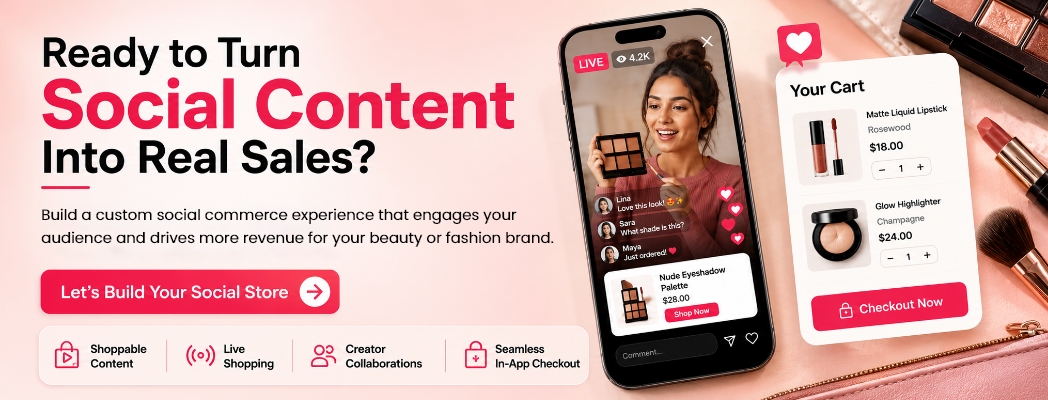
Live commerce allows brands and creators to demonstrate products in real time. Product launches, tutorials, Q&A sessions and limited-time offers can all be combined with direct purchasing.
TikTok’s recent beauty data shows how strongly live commerce is developing in this category.
User-Generated Beauty Content
Customer reviews, tutorials, before-and-after videos and product experiences can provide valuable social proof.
Brands can turn high-quality UGC into shoppable content and use it across social feeds, product pages and advertising campaigns.
Social Commerce Strategies for Fashion Brands
Fashion has a natural advantage in social commerce because customers already use visual content for style inspiration.
Shoppable Fashion Videos
Fashion brands can turn styling videos, seasonal collections and outfit inspiration into shoppable experiences.
A creator could showcase an entire look with individual product tags for the shirt, trousers, shoes and accessories.
Creator-Led Fashion Commerce
Fashion creators can recommend products based on their personal style and audience. With creator storefronts and affiliate functionality, brands can connect content directly with sales.
Shoppable Lookbooks
Instead of using a lookbook only for inspiration, brands can make every featured product clickable and purchasable.
This creates a more interactive alternative to traditional fashion catalogs.
Live Fashion Shopping
Live shopping can be used for collection launches, styling sessions, product demonstrations and exclusive offers.
It also creates opportunities for real-time questions. Customers can ask about sizes, materials, colors and styling while the creator or brand representative responds.
Key Features of a Beauty and Fashion Social Commerce Platform
Businesses planning a dedicated social commerce platform can combine social engagement with full eCommerce functionality.
| Important features include: | ||
| Shoppable videos | Live shopping | AI product recommendations |
| Product tagging | Product catalogs | Visual search |
| Creator profiles | In-app checkout | Social sharing |
| Creator storefronts | Reviews and ratings | Wishlist |
| Influencer management | User-generated content | Customer analytics |
| Affiliate commissions | Personalized product feeds | Sales attribution |
For larger brands, the platform can also connect with ERP, CRM, PIM, inventory, payment and logistics systems.
The Role of Influencers and Creators in Social Commerce
Influencer marketing and creator commerce are related but not identical.Traditional influencer marketing often focuses on awareness. A creator publishes sponsored content and the brand measures reach, engagement or campaign performance.
Creator commerce goes further.
The creator can recommend products, tag products, operate a storefront, generate sales and earn a commission based on performance.
This creates a more direct relationship between:
Creator → Content → Product → Sale
For beauty and fashion businesses, this model can be especially effective because audiences often follow creators for product recommendations, styling inspiration and practical demonstrations.
How AI Can Improve Social Commerce
AI can make social shopping more relevant and personalized.
AI Product Recommendations
Recommend products based on browsing behaviour, purchase history and interactions.
AI Shopping Assistants
Help customers find suitable products through conversational queries.
Personalized Feeds
Display content and products based on customer interests.
AI Fashion Styling
Suggest outfits, combinations and complementary products.
Virtual Try-On
Allow customers to visualize selected beauty or fashion products before purchase.
Visual Search
Let customers upload an image and find visually similar products.
Predictive Analytics
Help brands understand demand, customer behaviour and likely purchase patterns.
The combination of AI + social commerce + creator content can create a much more personalized shopping journey.
Benefits of Social Commerce for Beauty and Fashion Brands
A well-planned social commerce strategy can help brands:
| A well-planned social commerce strategy can help brands: | |
| Improve product discovery | Create new creator-led sales channels |
| Reduce the distance between content and checkout | Improve product recommendations |
| Increase customer engagement | Personalize shopping experiences |
| Build stronger social proof | Support live shopping and video commerce |
| Generate more UGC | Track creator-driven conversions |
Most importantly, social commerce allows brands to meet customers where discovery already happens.
Social Commerce vs Traditional eCommerce
Traditional eCommerce still plays an important role. The opportunity is to connect it with social discovery rather than replace it.
| Traditional eCommerce | Social Commerce |
| Search-led discovery | Content-led discovery |
| Product pages | Shoppable content |
| Brand-led communication | Creator and community-led discovery |
| Website-focused | Social and omnichannel |
| Product comparison | Demonstration and social proof |
| Checkout after browsing | Shorter content-to-purchase journey |
The strongest strategy is often an omnichannel commerce model where social platforms generate discovery while the brand’s eCommerce infrastructure manages products, inventory, orders and customer relationships.
How to Build a Social Commerce Platform for Beauty & Fashion
For businesses looking to create their own social shopping ecosystem, development should start with the commerce model.
First, define whether the platform will be B2C, creator-led, marketplace-based or a hybrid model.
Next, design the core customer journey:
Social Feed → Video/Post → Product Discovery → Product Details → Cart → Checkout
Creator functionality can then be added through creator profiles, product tagging, affiliate commissions and performance analytics.
The platform can also integrate live commerce, shoppable videos, AI recommendations, conversational shopping and personalized product discovery.
Finally, connect the commerce platform with existing ERP, CRM, PIM, payment and logistics systems to create a complete digital commerce ecosystem.
The Future of Social Commerce for Beauty and Fashion
Social commerce is moving beyond simple product tagging.
The next stage combines creator commerce, shoppable video, live shopping, AI personalization and immersive product discovery.
A fashion creator may publish a styling video, an AI engine may recommend complementary products and a customer may complete the purchase directly from the content. A beauty creator may demonstrate a product during a live stream while customers ask questions and purchase products in real time.
This is the direction of content-led commerce.
For beauty and fashion brands, the opportunity is not simply to sell on social media. It is to make content itself part of the shopping experience.
Conclusion
Social commerce for beauty brands and social commerce for fashion brands is becoming an important part of modern eCommerce. Visual content, creators, influencers, live shopping and personalized recommendations can bring product discovery and purchasing much closer together.
For brands, the goal is simple: create content that inspires, make products easy to discover and remove unnecessary steps between interest and purchase.
The result is a connected journey:
Content → Discovery → Engagement → Product → Checkout → Advocacy
For businesses looking to build this experience, SonicTechPro can develop custom social commerce platforms, shoppable video solutions, live commerce platforms, creator commerce solutions and AI-powered eCommerce applications tailored to specific business requirements.
FAQs About Social Commerce in Beauty & Fashion
