Travel Agency Planning Platform
Travel agencies can create personalized itineraries for customers and combine flights, hotels, activities, transportation, and destination services into a single trip plan.
By clicking "Accept" or Continuing to use our site, you agree to our Privacy Policy.

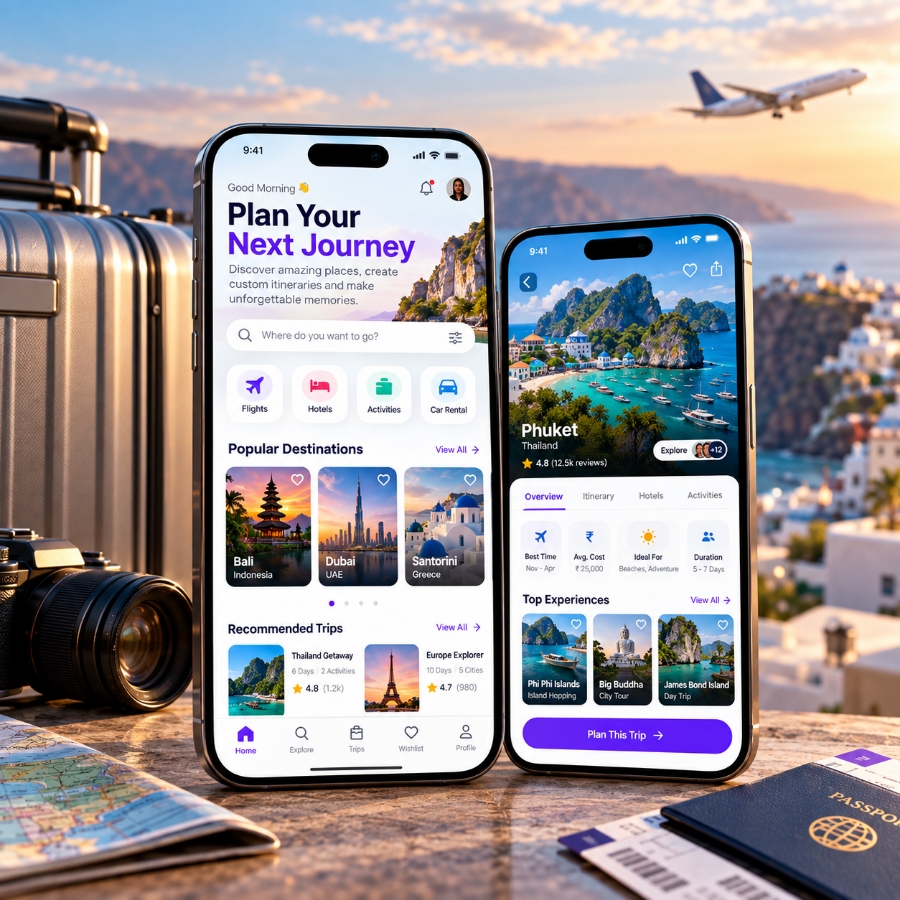
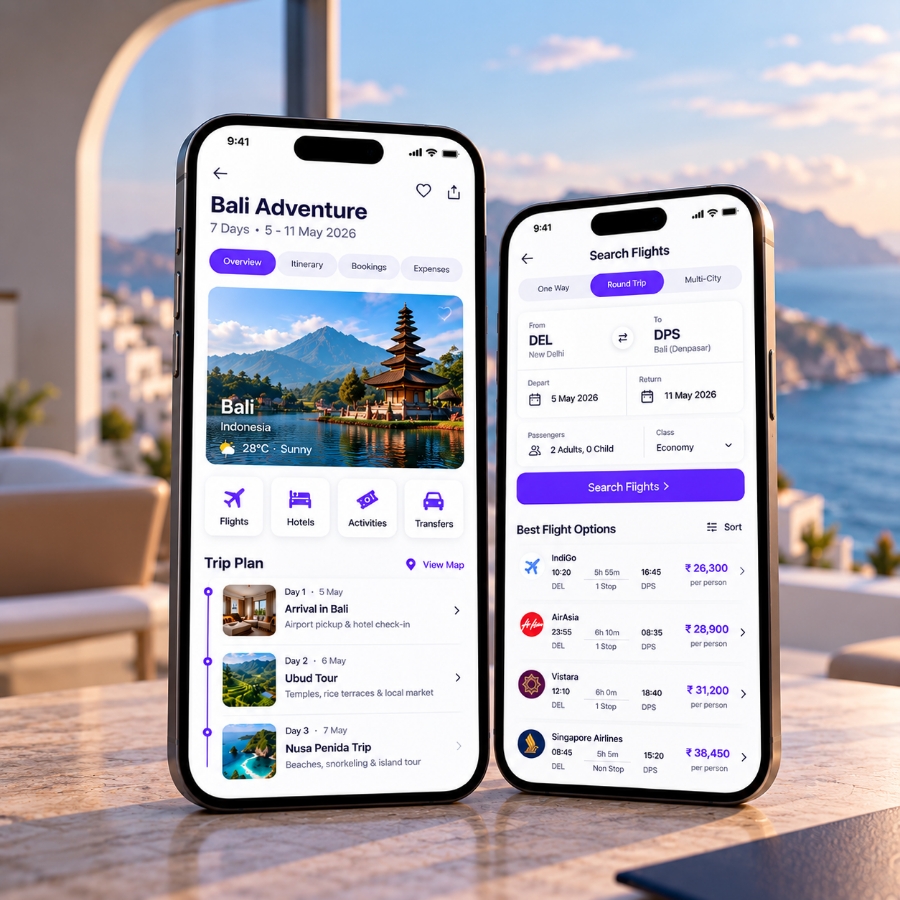
Sonic TechPro develops custom travel planner apps for travel businesses that want more than a basic booking application. The platform can support itinerary creation, destination discovery, trip collaboration, AI travel planning, route optimization, offline travel information, booking management, notifications, and personalized recommendations.
Travel planner app development involves building mobile or web applications that help travelers discover destinations, create itineraries, organize bookings, plan routes, manage travel budgets, and receive personalized recommendations. A custom travel planner app can connect maps, flight and hotel APIs, activity providers, weather services, payment gateways, and AI tools to create a connected trip planning experience.
A travel planning app is a digital platform that helps users organize a trip from the first destination search through the final day of travel. A travel planner can bring destinations, activities, routes, bookings, schedules, expenses, and travel information into one place.
Reviewed by Travel Technologies Expert Sumit Kumar
Sonic TechPro provides Travel Planner App Development Services covering product strategy, UX/UI design, mobile development, backend engineering, AI integration, API connectivity, testing, deployment, and ongoing support.
Discuss Your Travel Planner AppDefine the business model before development begins. Our travel technology consultants help map the target audience, destinations, revenue model, trip planning journey, integrations, core features, and product roadmap.
Build a custom platform around your travel business. The application can support travelers, travel agents, tour operators, destination partners, activity providers, and administrators through dedicated interfaces.
Create flexible itinerary tools for day-by-day trip planning. Users can add destinations, activities, bookings, transportation, notes, schedules, and reminders while keeping the complete trip in one place.
Add AI capabilities for personalized itinerary generation, destination recommendations, activity discovery, travel questions, route suggestions, and itinerary changes.
Design clear travel journeys around destination discovery, trip creation, itinerary management, bookings, maps, recommendations, and travel alerts. The interface can be designed for both quick planning and detailed trip management.
Connect the application with flight, hotel, activity, destination, mapping, weather, currency, payment, and communication services. API architecture can be designed around real-time data and future integration needs.
Test booking flows, itinerary logic, maps, APIs, authentication, payments, notifications, location services, device compatibility, performance, and security before launch.
Post-launch support can include application monitoring, API updates, bug fixes, performance improvements, security updates, analytics, and new feature development.
A Custom Travel Planner App Development approach allows the product to support different travel businesses and customer segments.
Travel agencies can create personalized itineraries for customers and combine flights, hotels, activities, transportation, and destination services into a single trip plan.
Tour operators can create structured travel packages with schedules, activities, transportation, accommodation, guides, and booking options.
Startups can launch niche travel planner apps focused on road trips, family travel, luxury travel, solo travel, adventure trips, business travel, or specific destinations.
Tourism organizations can create destination-focused applications featuring attractions, local experiences, events, routes, recommendations, and itinerary planning.
Corporate travel applications can support employee trips with schedules, business destinations, accommodation, transportation, expense tracking, and travel policies.
A dedicated road trip planner can help users build multi-stop routes, discover attractions along the way, estimate travel distances, organize overnight stays, and manage the complete journey.
AI can make a travel planner more responsive to individual travel preferences. The right AI features should solve specific planning problems rather than simply add a chatbot.
An AI Trip Planner can create an initial travel plan using destination, dates, budget, interests, travel style, and available time.
Generate a structured itinerary with suggested activities, travel times, destinations, and schedule blocks. Travelers can revise the plan through natural-language prompts.
A conversational AI travel planner can answer destination questions, suggest activities, explain itinerary options, and help travelers make changes during a trip.
AI models can analyze stated preferences and trip context to suggest destinations, restaurants, attractions, activities, and experiences.
The application can evaluate location, timing, travel distance, opening hours, and user preferences when arranging activities within an itinerary.
Natural-language search can allow users to ask questions. The application can convert the request into structured planning inputs and generate a starting itinerary.
Bring maps, travel inventory, bookings, payments, and timely updates together in one seamless trip-planning experience.
Google Maps, Mapbox, GPS, geolocation, routing, location sharing, distance calculation, and mapping APIs can support destination discovery and route planning.
Flight APIs, GDS integrations, hotel APIs, transportation APIs, activity APIs, and destination data sources can connect travel inventory with the planning experience.
Hotel, flight, vacation rental, activity, tour, and restaurant booking services can be connected based on the business model.
Weather APIs provide destination forecasts. Currency APIs support exchange rates for international trips.
Stripe, PayPal, Razorpay, Adyen, Apple Pay, Google Pay, and regional payment solutions can support applicable transactions.
Push notifications, email, SMS, and communication services can deliver booking confirmations, itinerary reminders, travel alerts, and schedule updates.
Turn a travel planning concept into a working digital product with the right combination of itinerary tools, destination discovery, maps, booking integrations, personalization, and AI.
Sonic TechPro can help you define the MVP, plan the technical architecture, select travel APIs, design the traveler experience, and develop a scalable travel planner app for your target market.
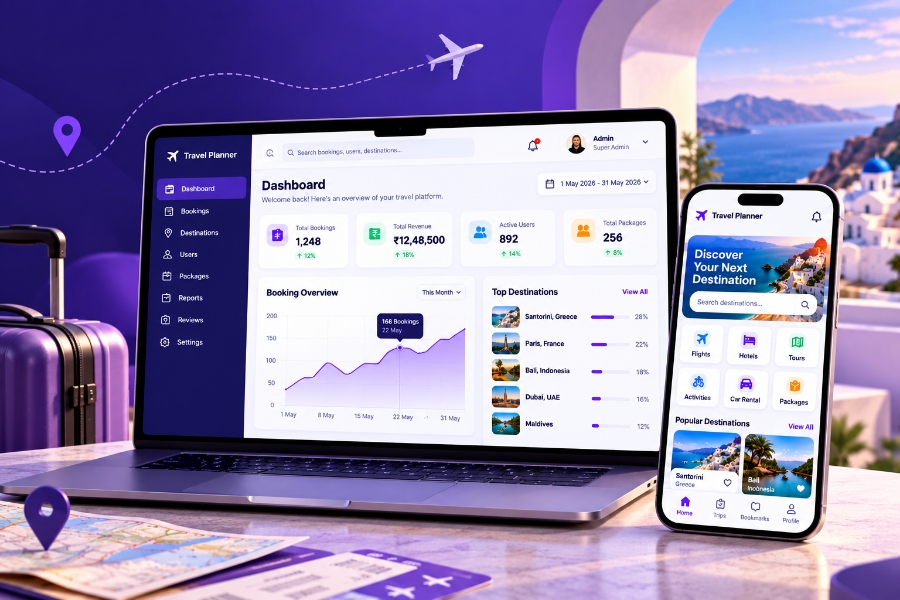
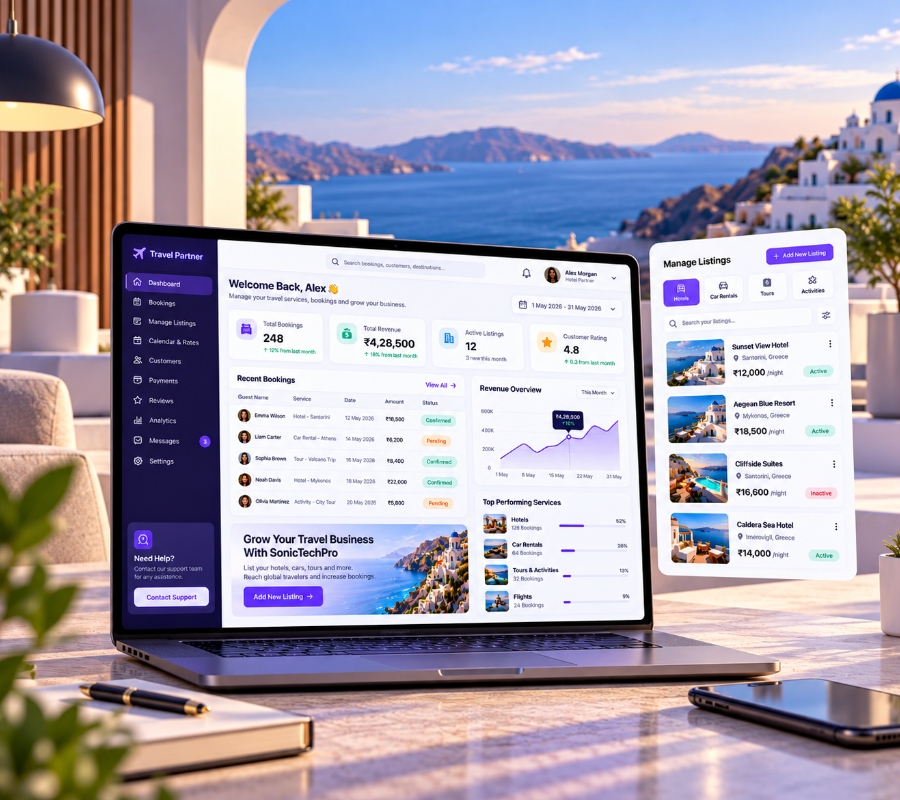
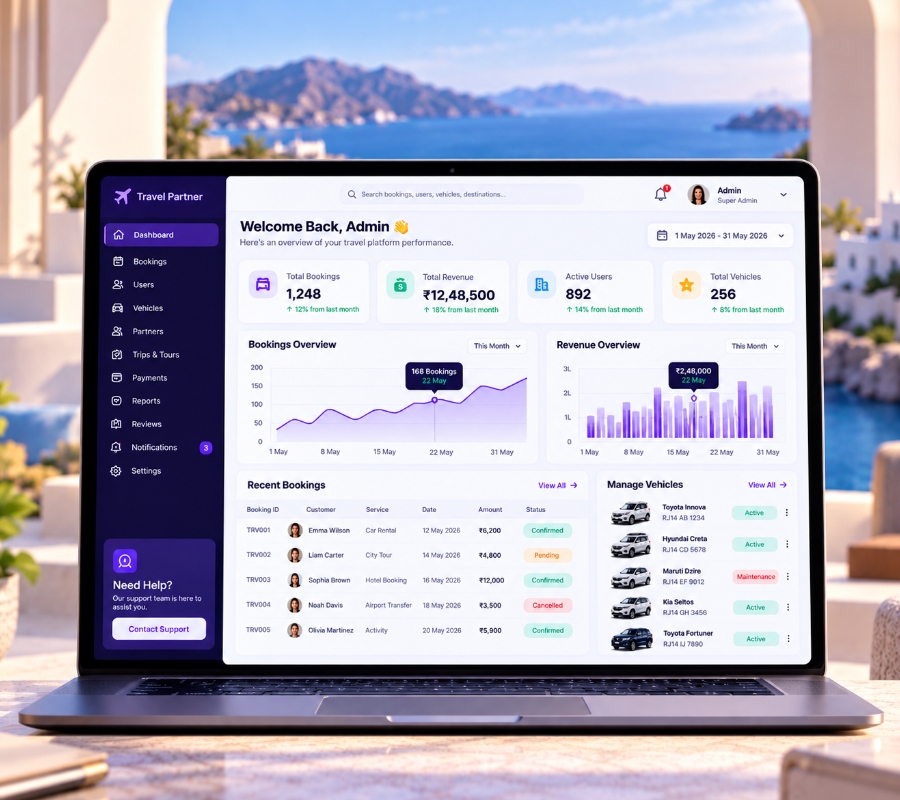
Our travel planner app development services include role-based panels for travelers, travel partners, and administrators. We design each interface around your operational needs so users can manage trips, partners, bookings, content, and platform activities from dedicated dashboards.
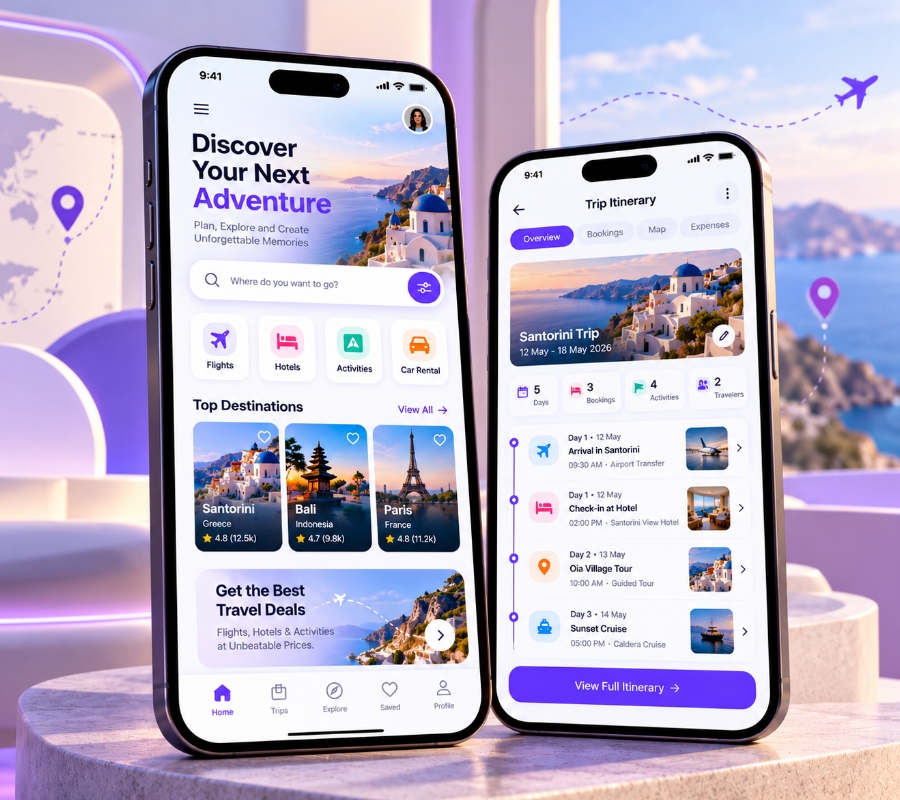
The traveler-facing application can include destination discovery, trip creation, itinerary management, bookings, maps, recommendations, budget tracking, notifications, and document storage.
Provide one place to view upcoming trips, itinerary progress, bookings, schedules, expenses, and important travel information.
Allow travelers to add activities, destinations, bookings, notes, routes, and reminders to a day-by-day itinerary.
Show attractions, restaurants, hotels, experiences, events, and nearby points of interest based on the selected destination.
Travel agencies, hotels, tour operators, guides, activity providers, and other partners can manage relevant listings, availability, services, bookings, and customer requests.
Administrators can manage users, destinations, listings, bookings, content, partners, payments, reports, analytics, and application settings.
Manage traveler profiles, accounts, preferences, trip history, permissions, and account activity.
Manage destinations, attractions, travel guides, activities, recommendations, advisories, and other planning content.
Monitor bookings, partner accounts, availability, transactions, cancellations, and customer requests.
Administrators can manage users, destinations, listings, bookings, content, partners, payments, reports, analytics, and application settings.
Manage traveler profiles, accounts, preferences, trip history, permissions, and account activity.
Manage destinations, attractions, travel guides, activities, recommendations, advisories, and other planning content.
Monitor bookings, partner accounts, availability, transactions, cancellations, and customer requests.
Track registrations, active users, trip creation, itinerary activity, bookings, destinations, engagement, revenue, and other product KPIs.
Sonic TechPro develops travel planning platforms with a technology architecture that can support mobile apps, web applications, backend APIs, travel data, AI services, maps, bookings, and real-time notifications.
From initial product planning to final deployment, As a leading travel app development company we follow a structured development process that turns your travel itinerary planner app concept into a practical, scalable, and user-friendly product
Discuss Your Travel Planner AppDefine the target travelers, business model, destinations, revenue streams, core journeys, integrations, and product scope.
Design the experience around destination discovery, trip creation, itinerary building, bookings, maps, recommendations, and travel management.
Plan the database, backend, APIs, authentication, maps, travel integrations, AI services, notifications, payments, and security requirements.
Develop the traveler application, partner interfaces, admin dashboard, backend services, APIs, and supporting platform components.
Test application functionality, itinerary logic, API responses, maps, payments, notifications, performance, security, and device compatibility.
Monitor application performance, resolve issues, update integrations, improve user journeys, and add new capabilities as the product grows.
The cost of travel planner app development depends on the product scope and technical requirements. A simple itinerary application requires a different development effort than an AI-powered travel platform connected to live flight, hotel, activity, and mapping services.
| Product Level | Typical Modules | Suitable For |
|---|---|---|
| Travel Planner MVP | Trip creation, itinerary, destination discovery, basic maps, user account, admin | Startups and new travel products |
| Advanced Travel Planner | AI planning, bookings, route planning, budget, notifications, APIs, partner panel | Growing travel businesses |
| Enterprise Travel Platform | AI, multi-region support, advanced integrations, analytics, partner ecosystem, personalization | Large travel and tourism businesses |
The final development estimate depends on the selected features, platforms, integrations, AI requirements, and product scope.
A travel planner needs both travel-domain understanding and strong application engineering. Sonic TechPro brings these requirements together through product strategy, mobile development, backend engineering, travel APIs, AI integration, maps, booking technology, and ongoing support.
Build around real traveler journeys instead of adding disconnected features.
Create the platform around your business model, target audience, destinations, integrations, and growth plans.
Add AI travel planning, itinerary generation, recommendations, conversational assistance, and intelligent trip management where the use case supports AI.
Connect the application with travel inventory, maps, payments, weather, currency, communication, and other required services.
Build iOS, Android, web applications, backend systems, and admin panels as required by the product scope.
Continue improving the product through maintenance, security updates, API changes, performance work, analytics, and feature enhancements.
A travel planner app helps users organize trips by combining destination discovery, itinerary planning, maps, bookings, activities, schedules, expenses, and travel information in one platform.
The cost depends on features, platforms, integrations, AI functionality, maps, booking APIs, backend requirements, and admin capabilities. An MVP generally requires less development effort than a full travel platform with live inventory and AI planning.
Development time depends on the product scope. An MVP with core itinerary and planning features requires less time than an advanced platform with AI, booking APIs, real-time services, partner dashboards, and multi-region support.
Core features can include trip creation, itinerary management, destination discovery, maps, route planning, booking management, travel alerts, budget tracking, offline access, travel recommendations, and personalized planning.
Yes. AI travel planner app development can include AI itinerary generation, personalized recommendations, conversational travel assistance, natural-language search, itinerary optimization, and destination suggestions.
Yes. A travel planner can connect flight, hotel, activity, transportation, and other travel APIs. The exact integrations depend on the business model and required travel inventory.
Yes. A road trip planner can include multi-stop routes, map-based navigation, attractions along the route, accommodation suggestions, distance calculations, fuel or expense planning, and day-by-day itineraries.
Yes. A collaborative trip planner can allow multiple travelers to add activities, edit plans, share recommendations, vote on options, and view itinerary updates.
Travel planner applications can use technologies such as Flutter, React Native, Swift, Kotlin, Node.js, Python, Java, PostgreSQL, MongoDB, AWS, Google Cloud, Google Maps, Mapbox, and AI APIs based on the product requirements.
Connect with Sonic TechPro for projects or partnerships — great things happen when we collaborate.